
As we age, our bones naturally lose density — but for some, this process becomes more serious and increases the risk of fractures. One of the most common and debilitating forms is hip osteoporosis. Here’s what you should know to protect your mobility and bone health.
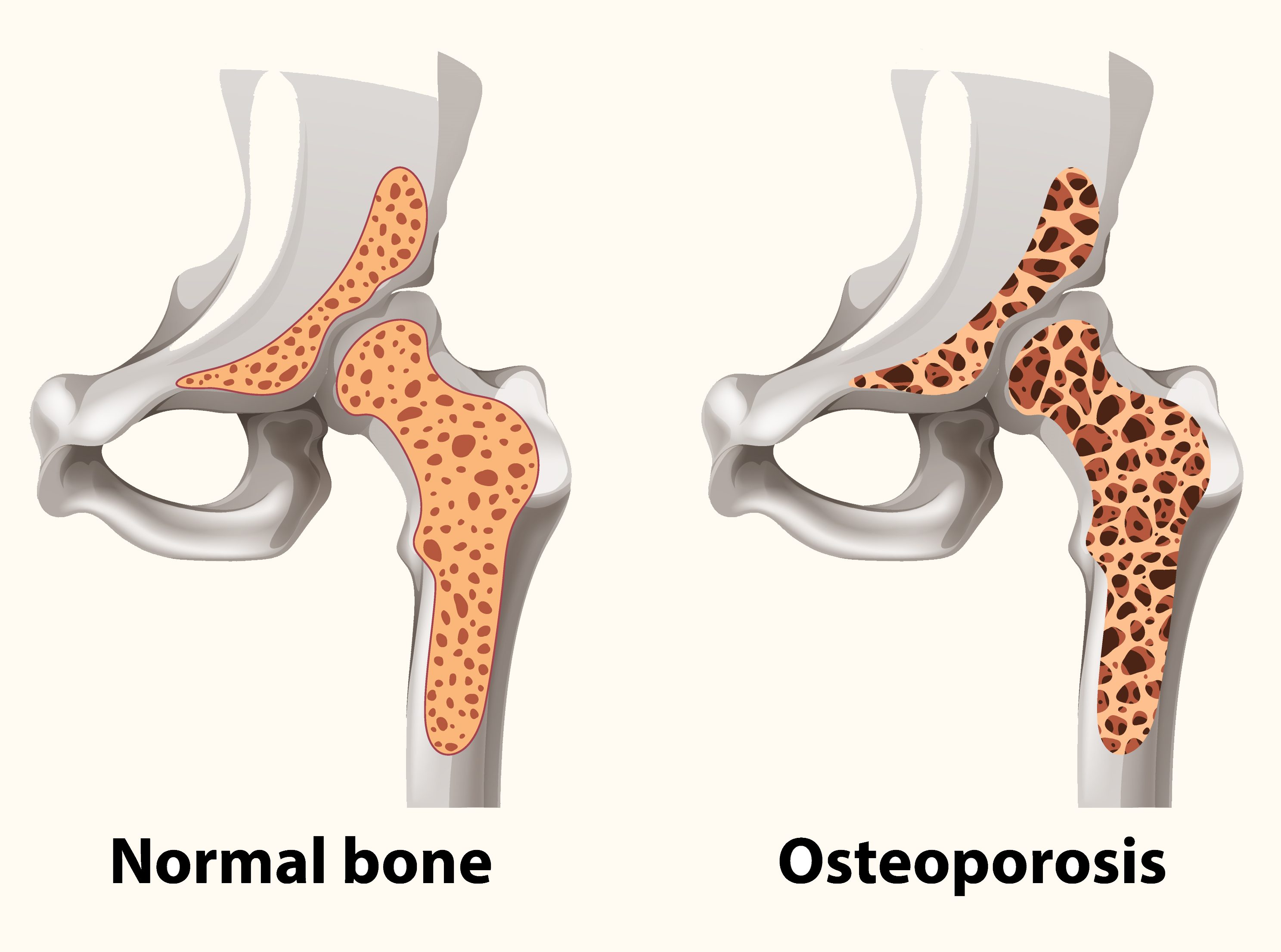 What is Hip Osteoporosis?
Hip osteoporosis refers to reduced bone density in the upper part of the femur (thigh bone), which increases the risk of hip fractures — a major cause of disability in older adults.
What Causes Hip Osteoporosis?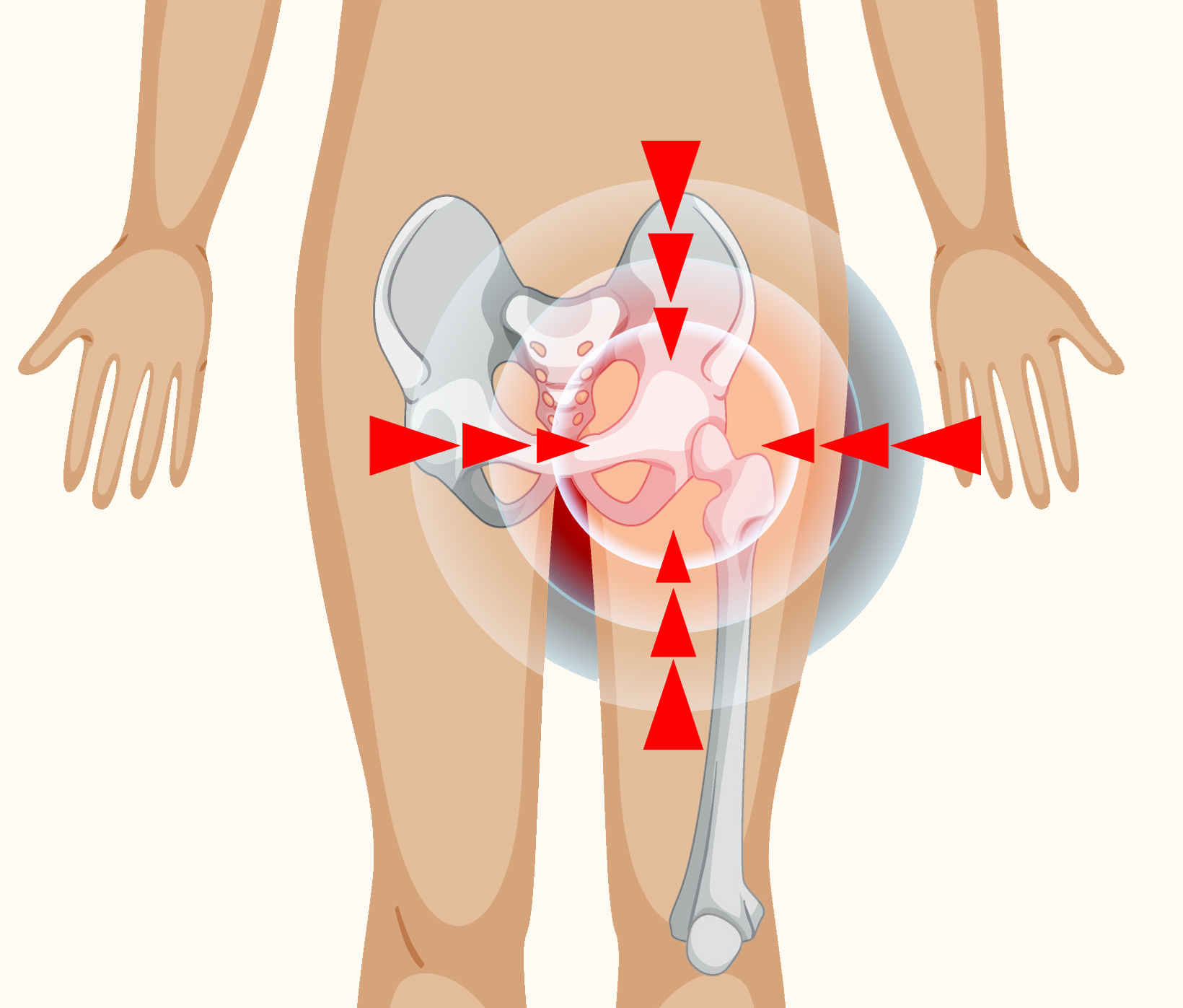
- Aging and hormonal changes (especially postmenopausal estrogen loss)
- Nutritional deficiencies: low calcium or vitamin D
- Physical inactivity
- Smoking, alcohol use, or long-term steroid use
- Genetics and previous fractures
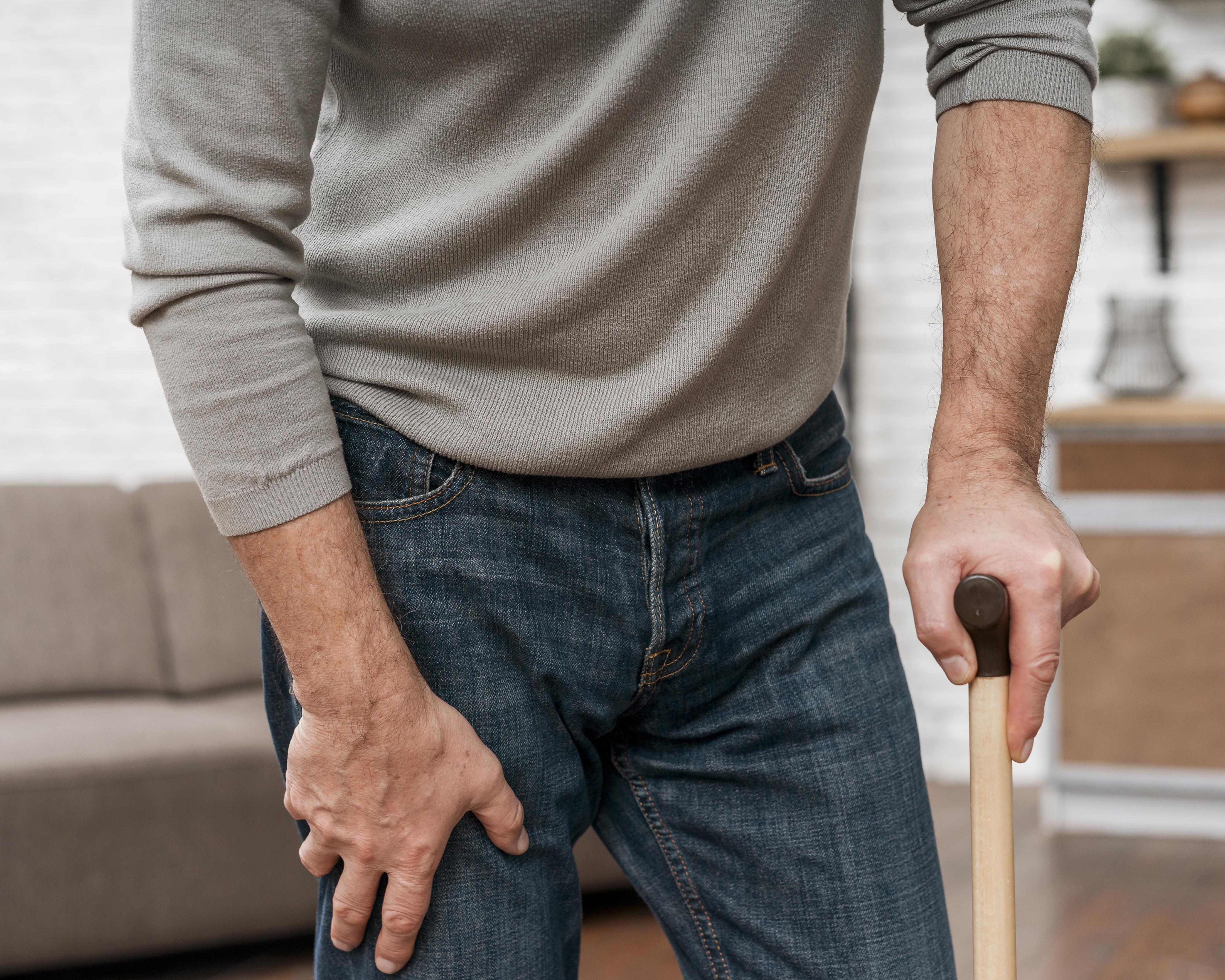 Symptoms of Hip Osteoporosis?
Often no symptoms until a fracture occurs
Sudden hip pain after a minor fall
Difficulty walking or standing after injury
In some cases, loss of mobility or balance over time
How to Treat Hip Osteoporosis?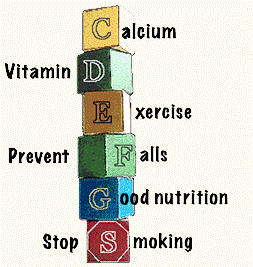
- Structured physiotherapy and home exercise plans
- Lifestyle changes: quit smoking, limit alcohol, avoid high-fall-risk environments
- Calcium and vitamin D supplementation
- Medications like bisphosphonates to slow bone loss
- In severe cases, surgery after fractures may be required
 How Physiotherapy Can Help?
Strength and balance training to reduce fall risk
Safe weight-bearing exercises to improve bone density
Gait retraining and postural correction
Education on fall prevention and bone health maintenance