
Have you ever experienced neck pain that travels into your shoulder or arm, or noticed tingling, numbness, or weakness in your hand?
While these symptoms may feel like they are coming from the arm itself, sometimes the source can actually be a nerve in the neck.
Cervical radiculopathy occurs when a nerve in the cervical spine becomes irritated or compressed. Symptoms can vary from person to person, but understanding what is contributing to them is an important first step towards appropriate management and recovery.
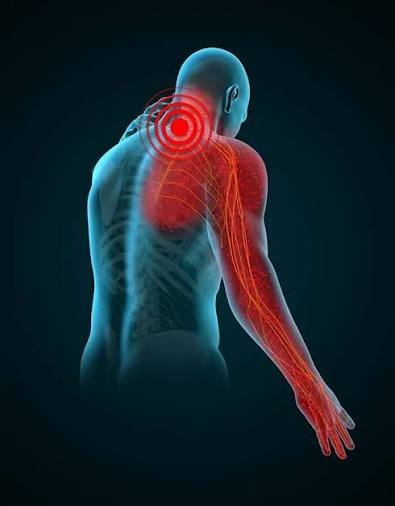 What is Cervical Radiculopathy?
The cervical spine is the section of your spine that makes up your neck. Nerves branch out from the cervical spine and travel into the shoulders, arms, and hands.
Cervical radiculopathy occurs when one of these nerve roots becomes irritated or compressed.
Because the affected nerve travels into the arm, symptoms are not always limited to the neck. Some people may experience pain, tingling, numbness, or weakness extending into the shoulder, arm, or hand.
What Causes Cervical Radiculopathy?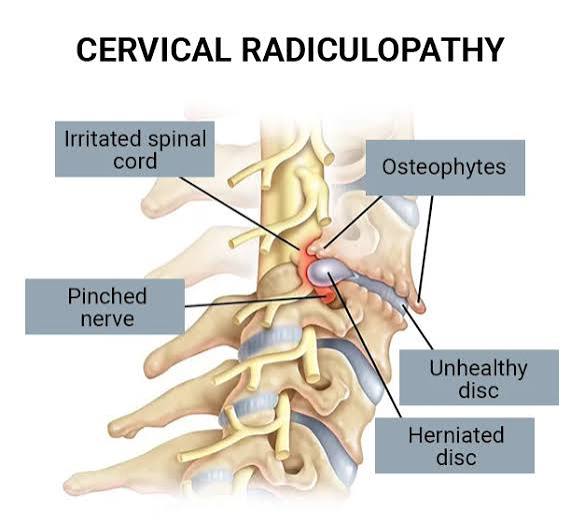
There are several reasons why a cervical nerve root may become irritated or compressed.
Common causes can include:
- Disc-related changes – a cervical disc may bulge or herniate and irritate a nearby nerve root
- Age-related changes – changes in the joints and discs of the cervical spine can reduce the space available for a nerve
- Foraminal narrowing – the opening through which a nerve exits the spine can become narrower
- Inflammation around the nerve root
- Less commonly, an injury or other medical condition may contribute to nerve irritation
It is also important to remember that findings on scans do not always match a person’s symptoms. Assessment should consider your symptoms, physical examination, function, and medical history rather than relying on imaging alone.
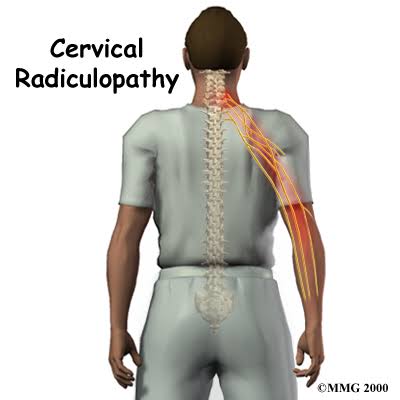 Common Symptoms
Symptoms of cervical radiculopathy can vary depending on which nerve is affected.
You may notice:
- Neck pain or stiffness
- Pain travelling into the shoulder, arm, or hand
- Pins and needles or tingling
- Numbness or altered sensation
- Weakness in the arm or hand
- Reduced grip strength
- Symptoms that change with certain neck or arm positions
Some people experience significant arm symptoms with relatively little neck pain.
Treatment Options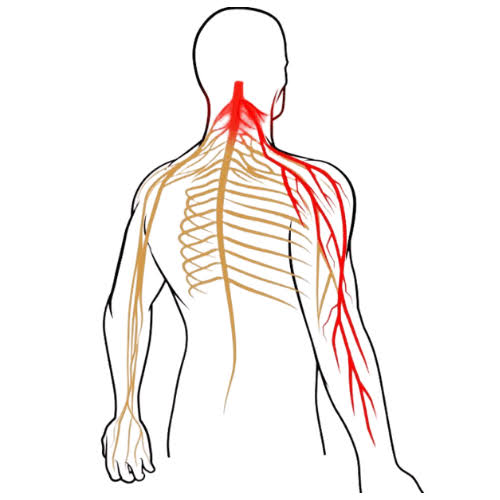
Many cases of cervical radiculopathy can be managed conservatively, particularly when there are no signs of serious or progressive neurological problems.
Management may include:
- Staying active within comfortable limits
- Temporarily modifying activities that significantly aggravate symptoms
- Appropriate neck and upper-body movement
- Progressive strengthening exercises
- Gradually returning to normal activities, work, and exercise
- Medication when appropriate and recommended by your GP or pharmacist
- Education about symptoms and strategies for managing flare-ups
Complete rest or avoiding movement for long periods is not usually the goal. Instead, management should focus on gradually restoring comfortable movement and function.
In some cases, further medical assessment, imaging, injections, or surgical review may be considered depending on the severity and progression of symptoms.
 How Can Physiotherapy Help?
Physiotherapy can help determine whether your symptoms are consistent with cervical radiculopathy and identify factors that may be contributing to your pain and functional limitations.
Your physiotherapist may:
- Assess your neck, shoulder, and upper-limb movement
- Check strength, sensation, and other neurological signs where appropriate
- Identify movements or activities that aggravate or reli